
Aging is not a failure of the body.

Many conditions begin before symptoms appear.

All physical imbalance begins when the control center loses flow.

Restoration can only begin from the inside out.

This is not treatment,而是自救。

It is not imposed.

It is a reactivation.

It is a return to self-regulation.

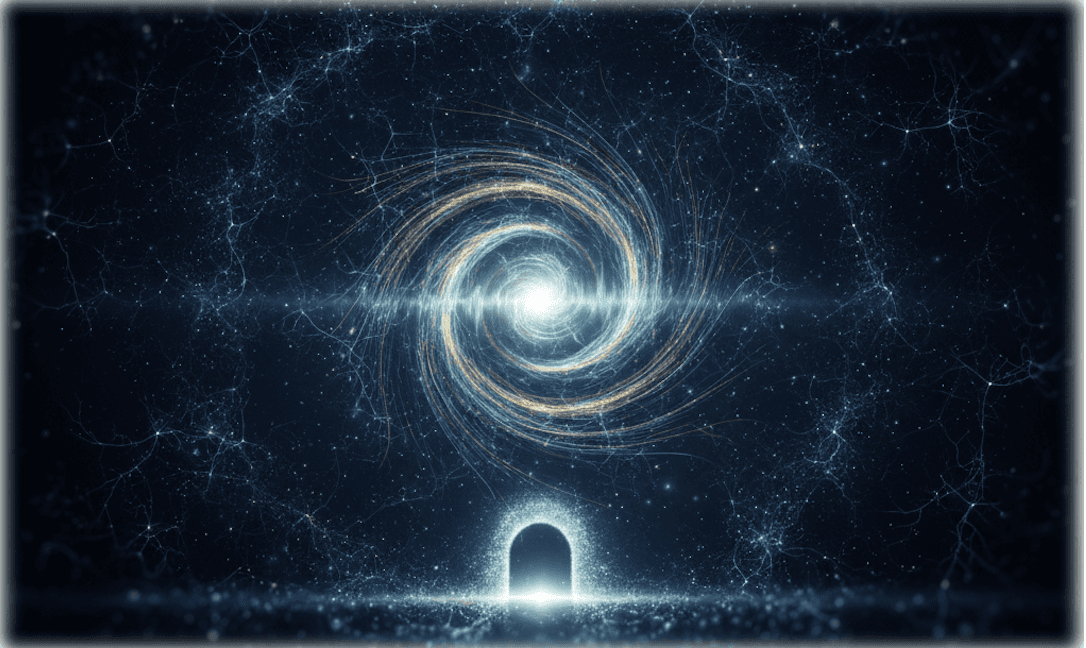
Spacetime Passage is a threshold,

not a method.


衰老,並不是身體的失敗。

許多情況在症狀出現之前就開始了。

當控制中心失去流量時,所有的物理失衡就開始了。

恢復只能從內到外開始。

這不是治療,而是自救。

它不是強加的。

這是一次重新啟動。

這是自我調節的迴歸。

Spacetime Passage 是一道門,

而不是一個方法。


Aging is not a failure of the body.

Many conditions begin before symptoms appear.

All physical imbalance begins when the control center loses flow.

Restoration can only begin from the inside out.

This is not treatment,而是自救。

It is not imposed.

It is a reactivation.

It is a return to self-regulation.

Spacetime Passage is a threshold,

not a method.


衰老,並不是身體的失敗。

許多情況在症狀出現之前就開始了。

當控制中心失去流量時,所有的物理失衡就開始了。

恢復只能從內到外開始。

這不是治療,而是自救。

它不是強加的。

這是一次重新啟動。

這是自我調節的迴歸。

Spacetime Passage 是一道門,

而不是一個方法。


Aging is not a failure of the body.

Many conditions begin before symptoms appear.

All physical imbalance begins when the control center loses flow.

Restoration can only begin from the inside out.

This is not treatment,而是自救。

It is not imposed.

It is a reactivation.

It is a return to self-regulation.

Spacetime Passage is a threshold,

not a method.


衰老,並不是身體的失敗。

許多情況在症狀出現之前就開始了。

當控制中心失去流量時,所有的物理失衡就開始了。

恢復只能從內到外開始。

這不是治療,而是自救。

它不是強加的。

這是一次重新啟動。

這是自我調節的迴歸。

Spacetime Passage 是一道門,

而不是一個方法。


What Is SpaceTime Passage


This page describes a research framework under investigation

and does not provide instructional or intervention guidance.


SpaceTime Passage is an exploration of a long-overlooked reality:

Aging, illness, fatigue, and the loss of vitality

are often not failures of the body,

but signs of a system that has been running under restraint.


The human body is not static.

It is a continuously operating system.


When pressure accumulates,

movement slows.

Compensation replaces ease.

Braking becomes habitual.


What appears as decline

is often the result of a system that never fully stopped—

yet was never allowed to run freely.


SpaceTime Passage does not approach health from the outside in.


It begins from within—

by restoring internal space,

loosening long-held compression,

and allowing the system to remember

how it is meant to function.


This is not about fixing parts.


It is about releasing the conditions

that quietly prevented the whole from moving.


SpaceTime Passage|穿越時空之門


本頁麵用於介紹一項仍在研究中的研究框架,不構成任何教學、幹預或可執行指導。


正在重新審視一個長期被忽略的現實:


衰老、疾病、疲憊與活力流失,

往往不是身體出了問題,

而是一個持續運轉的繫統

長期在受限狀態下運行的結果。


人體並非靜止的結構,

而是一個不斷運作的整體繫統。


當壓力持續累積,

運動開始減速,

代償取代了輕鬆,

剎車在無意識中一次次被踩下。


看似退化的表象,

往往並非繫統停止,

而是從未真正被允許順暢運行。


SpaceTime Passage 並不從外部修補身體。


它從內部開始——


通過恢複空間、

鬆解長期壓縮,

讓繫統重新憶起

原本的運作方式。


這不是修理零件。


而是解除那些

悄然限製整體運行的條件


Mission & Vision


Mission

To advance human healthspan through brain-centered rhythmic restoration.


SpaceTime Passage investigates how brain-based rhythm regulation

and deep restorative states may influence energy stability, stress resilience, emotional balance,

and markers related to healthy aging.


Our mission is to develop a measurable, research-grounded framework t

hat supports healthspan by working with the brain’s innate capacity for restoration and systemic coherence.


Vision

A future where individuals can understand and work with their own internal rhythms.


We envision a world in which people are empowered to engage with their physiological

and neural rhythms consciously—using gentle, brain-centered restorative practices

to support long-term vitality, emotional stability, and resilient aging.


Guiding Principles


  • Science-first inquiry

    Every hypothesis must be observable, measurable, and open to refinement.

  • Respect for human variability

    Rhythm patterns differ across individuals; healthspan pathways must reflect this diversity.

  • Integration without dogma

    We use modern scientific tools to evaluate and refine restorative practices—without ideology.

  • Accessibility and safety

    Methods should be practical, non-invasive, and suitable for real-world routines.

  • Ethics and transparency

    Research is conducted with informed consent, participant protection, and clear boundaries.


使命 與 願景


使命 Mission


以大腦為核心的節律修復,推動人類健康壽命(healthspan)的延展。


SpaceTime Passage 探索:

當大腦的節律調節能力被重新啟動,

並進入更深的修復狀態時,

是否能影響能量穩定、壓力復原力、情緒平衡,

以及與健康老化相關的指標。


我們的使命,是建立一套可測量、可研究、可持續迭代的框架——

透過大腦天生具備的修復能力與系統協調能力,支持更長期、更穩定的健康。


願景 Vision


一個人們能理解並運用自身內在節律的未來。


我們期望人們能以更清醒、更溫和的方式與自己的生理與神經節律合作——

透過以大腦為核心的恢復性練習,支持長期活力、情緒穩定與韌性老化。


指導原則 Guiding Principles


  • 科學優先的探索

    每個假說必須可觀察、可測量,並持續接受修正。

  • 尊重個體差異

    每個人的節律模式不同;健康路徑必須容納差異。

  • 整合但不教條

    使用現代科學工具評估並優化方法,但不被意識形態綁架。

  • 可及性與安全性

    方法應實用、非侵入,能融入日常。

  • 倫理與透明

    研究遵循知情同意、受試者保護與清晰界線。


Three Core Pillars


The following elements are presented as research frameworks and conceptual directions under ongoing investigation.


This research continues from the foundational orientation introduced earlier.


A unified structure for brain-centered healthspan research

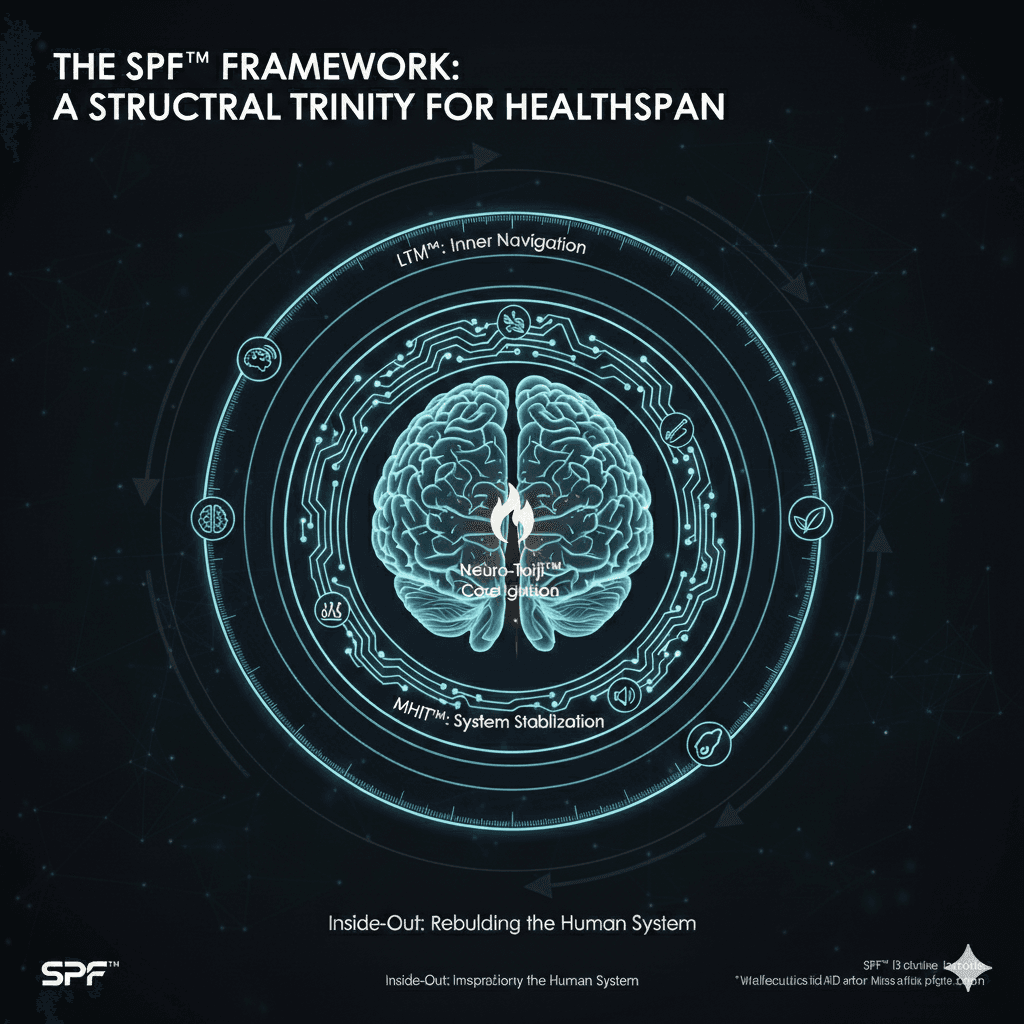
SpaceTime Passage is organized around three interdependent pillars.

They do not function as separate methods, but as one coherent system that operates from inner rhythm recognition to embodied restoration, and finally to external support.


Together, these pillars describe how change becomes possible

from knowing one’s internal rhythm,

to restoring neural coherence,

to supporting the body’s capacity for long-term balance.


1. Life-Time Rhythm Model

Navigation Layer · Knowing Where You Are

A personalized rhythm-mapping framework that helps identify individual neural and physiological tendencies.

This pillar functions as an orientation system

allowing individuals to recognize their baseline rhythms, constraints, and restoration patterns before any intervention occurs.

It answers the question:

“Where am I starting from?”


2. Neuro-Taiji

Internal Restoration Layer · From Within

A brain-centered restorative practice pathway that guides the nervous system into deep neural relaxation and rhythmic recalibration.

This pillar represents the internal process of change

where cognitive load softens, coherence is restored, and the system regains its capacity to self-regulate.

It answers the question:

“How does restoration begin?”


3. MHIT — Multidimensional Holographic Integrative Therapy

External Support Layer · Stabilizing Change

An external, non-invasive support layer that complements internal neural restoration.

MHIT integrates rhythm-supportive approaches designed to assist recovery, adaptation, and systemic balance—within a research-grounded and ethically supervised framework.


It answers the question:

“How is change supported and sustained?”

Together, these three pillars form a single structural pathway

from recognition,

to restoration,

to stabilization.

They are not optional steps, but different layers of the same process.


三大核心支柱


以下内容为研究框架与概念性研究方向的说明,仍处于持续探索与验证之中。


本研究延續前述所建立的基礎視角。


以大腦為核心的健康壽命研究整體結構

SpaceTime Passage 由 三個彼此依存的核心支柱 所構成。

它們不是三種獨立的方法,而是一個完整且連續的系統——

從內在節律的辨識,

到神經層級的修復,

再到外在支持的穩定。

這三個支柱共同描述了——

改變是如何發生的


1.生命節律模型( Life-Time Rhythm Model)


導航層 · 看見自己在哪裡

一套個人化的節律映射框架,用於理解個體在神經與生理層面的節律傾向。

這一層的角色不是介入,而是定位——

幫助人們在改變發生之前,看見自身的基礎節律、限制條件與修復潛能。

它回答的是:

「我此刻身在何處?」


2. 腦太極(Neuro-Taiji)


內在修復層 · 由內而生

一條以大腦為核心的恢復性練習路徑,

引導神經系統進入深層放鬆與節律重整的狀態。

這一層代表的是內在改變的發生過程——

當認知負荷下降、系統重新協調,

身體開始恢復自我調節的能力。

它回答的是:

「修復是如何開始的?」


3. 多維全息整合支持(MHIT)


外在支持層 · 穩定改變

一套非侵入式的外在支持層,

用以配合並穩定內在神經修復的成果。

MHIT 提供的是在研究與倫理監督下的支持方式,

協助身體完成恢復、適應與系統平衡。

它回答的是:

「改變如何被支持並持續?」


三者合一,形成一條完整的結構路徑——

從辨識,

到修復,

到穩定。


它們不是可選項,

而是同一過程中的不同層次


Research Focus


Exploring how brain-centered rhythmic restoration may influence human healthspan


Descriptions here reflect observed research perspectives and do not imply clinical application or personal intervention.


SpaceTime Passage focuses on how brain-centered rhythmic restoration may influence human healthspan,

through observable, non-invasive, and ethically guided research.


Rather than targeting disease or pathology, our research explores patterns of regulation and recovery

how the nervous system responds when internal rhythm is supported and cognitive load is reduced.


Our current research focus includes:


  • Energy regulation and vitality

    Changes in perceived energy levels, fatigue patterns, and daily functional stability.

  • Cognitive demand and stress resilience

    Shifts in mental clarity, emotional regulation, and perceived cognitive load.

  • Physiological recovery signals

    Observable indicators such as sleep quality, autonomic balance, breathing patterns, and somatic relaxation responses.

  • Healthspan-related biological markers (exploratory)

    Preliminary associations with resilience-related and aging-adjacent indicators, where appropriate.

  • Sustainability of practice adoption

    Whether rhythm-based practices can be integrated into real-world routines, and whether observed benefits persist over time.


Our aim is not intervention, diagnosis, or treatment.

It is to identify a scalable, measurable, brain-driven pathway

that supports healthier aging within safe, research-grounded boundaries.


研究重點


探索以大腦為核心的節律修復,如何影響人類健康壽命


此处所述为研究观察与研究视角,不代表临床应用或针对个人的干预建议。


SpaceTime Passage 的研究重點在於:

以可觀察、非侵入、符合倫理的方式,探索大腦節律修復對健康壽命的影響。


我們並不針對疾病或病理進行研究,

而是關注調節與恢復的模式——

當內在節律被支持、認知負荷下降時,

神經系統會如何回應。


目前的研究關注方向包括:


  • 能量調節與活力感受

    包括主觀能量、疲勞型態,以及日常功能穩定度的變化。

  • 認知負荷與壓力韌性

    心智清晰度、情緒調節能力與主觀壓力感受的轉變。

  • 生理恢復訊號

    如睡眠品質、自律神經平衡、呼吸節律與身體放鬆反應等可觀察指標。

  • 健康壽命相關生物指標(探索性)

    在合適條件下,觀察與韌性與老化相關的初步關聯。

  • 實踐可持續性

    節律型練習是否能被納入真實生活,

    以及其效果是否具有時間上的延續性。


我們的研究不進行診斷、不提供治療、也不取代醫療行為

其目標是辨識一條

安全、可量測、以大腦為核心的健康老化支持路徑

並嚴格維持研究邊界與倫理透明。


Join the Study


An invitation to participate in responsible healthspan research


SpaceTime Passage invites individuals to participate in an exploratory, brain-centered healthspan research study

focused on rhythmic restoration and nervous system regulation.


This study is conducted as part of an early-stage research initiative

examining how guided, rhythm-based practices may influence

well-being, resilience, and long-term functional balance.


Participation is entirely voluntary and designed for individuals

who are curious about contributing to non-invasive, ethically guided research

on human healthspan.


Who may participate

• Adults interested in supporting long-term well-being and healthy aging

• Individuals open to learning gentle, brain-centered restorative practices

• No prior experience with meditation, therapeutic practices, or research participation is required


What participation involves

• A guided exploratory experience over several weeks

• Simple, low-demand practices focused on neural relaxation and rhythm support

• Periodic check-ins and reflective self-assessments

• Clear communication regarding study scope, boundaries, and expectations


Important notes

• This study is not a medical treatment

• It does not provide diagnosis or replace medical care

• All participation follows ethical review principles and informed consent procedures


By participating, you contribute to the development of

accessible, research-grounded approaches

to brain-centered healthspan science.


→ Learn more about participation


參與研究


一份關於健康壽命研究的邀請


SpaceTime Passage 誠摯邀請有興趣的個人

參與一項以大腦為核心、節律修復為導向的探索性健康壽命研究。


本研究屬於早期研究階段,

旨在探索引導式、節律型練習

如何影響個體的整體感受、韌性與長期功能平衡。


所有參與皆為自願性質,

適合對非侵入、符合倫理的人體研究

抱持開放與好奇態度的參與者。


參與對象

• 關注長期健康與老化品質的成年人

• 願意嘗試溫和、大腦導向修復練習的個人

• 不需要冥想、療癒或研究經驗


參與內容

• 為期數週的引導式探索體驗

• 以神經放鬆與節律支持為核心的簡單練習

• 定期回饋與反思式自我觀察

• 清楚說明研究範圍、界線與參與期待


重要說明

• 本研究不是醫療行為

• 不提供診斷,也不取代任何醫療照護

• 所有流程皆遵循研究倫理與知情同意原則


您的參與,將有助於推動

可親近、以研究為基礎的大腦健康壽命探索路徑。


→ 了解更多參與方式


Foundation & Contact


Supporting responsible research in brain-centered healthspan science


The SpaceTime Passage Foundation is dedicated to advancing

public understanding of rhythmic health, restorative practices,

and brain-centered approaches to long-term well-being.

Our work supports:

  • ethically reviewed pilot research

  • development of accessible educational resources

  • collaboration with scientific, academic, and community partners

  • responsible dissemination of evidence-informed insights

The Foundation exists to ensure that research conducted within

the SpaceTime Passage initiative remains transparent, ethical,

and oriented toward public benefit.


Contact

Email

Spacetime.passage.project@gmail.com


Location

San Diego, California, USA


Collaboration & Inquiries

We welcome inquiries from researchers, clinicians,

academic institutions, community organizations,

and individuals interested in healthspan science

and rhythm-centered research.


© 2025 SpaceTime Passage Foundation · All Rights Reserved


The underlying logic of this research is explored in the Core Architecture.


基金會與聯絡方式


支持以大腦為核心的健康壽命研究


SpaceTime Passage 基金會 致力於推動

節律健康、修復實踐,以及

以大腦為核心的長期健康研究之公共理解。


基金會的工作重點包括:


  • 支持經研究倫理審查的前期研究計畫

  • 發展可近性高的健康與研究教育資源

  • 與學術、科學與社區機構建立合作

  • 以負責任方式分享具研究基礎的洞見


基金會的設立宗旨,是確保

SpaceTime Passage 所進行的研究,

能夠維持透明、合乎倫理,

並以公共福祉為核心方向。


聯絡我們


電子郵件

Spacetime.passage.project@gmail.com


地點

美國加州 · 聖地牙哥


合作與洽詢

我們歡迎研究人員、臨床專業人士、

學術機構、社區組織與對健康壽命科學

有興趣的個人與我們聯繫。


© 2025 SpaceTime Passage Foundation · 版權所有


本研究的底层逻辑,将在「核心架构」中展开。


What Is SpaceTime Passage


This page describes a research framework under investigation

and does not provide instructional or intervention guidance.


SpaceTime Passage is an exploration of a long-overlooked reality:

Aging, illness, fatigue, and the loss of vitality

are often not failures of the body,

but signs of a system that has been running under restraint.


The human body is not static.

It is a continuously operating system.


When pressure accumulates,

movement slows.

Compensation replaces ease.

Braking becomes habitual.


What appears as decline

is often the result of a system that never fully stopped—

yet was never allowed to run freely.


SpaceTime Passage does not approach health from the outside in.


It begins from within—

by restoring internal space,

loosening long-held compression,

and allowing the system to remember

how it is meant to function.


This is not about fixing parts.


It is about releasing the conditions

that quietly prevented the whole from moving.


SpaceTime Passage|穿越時空之門


本頁麵用於介紹一項仍在研究中的研究框架,不構成任何教學、幹預或可執行指導。


正在重新審視一個長期被忽略的現實:


衰老、疾病、疲憊與活力流失,

往往不是身體出了問題,

而是一個持續運轉的繫統

長期在受限狀態下運行的結果。


人體並非靜止的結構,

而是一個不斷運作的整體繫統。


當壓力持續累積,

運動開始減速,

代償取代了輕鬆,

剎車在無意識中一次次被踩下。


看似退化的表象,

往往並非繫統停止,

而是從未真正被允許順暢運行。


SpaceTime Passage 並不從外部修補身體。


它從內部開始——


通過恢複空間、

鬆解長期壓縮,

讓繫統重新憶起

原本的運作方式。


這不是修理零件。


而是解除那些

悄然限製整體運行的條件


Mission & Vision


Mission

To advance human healthspan through brain-centered rhythmic restoration.


SpaceTime Passage investigates how brain-based rhythm regulation

and deep restorative states may influence energy stability, stress resilience, emotional balance,

and markers related to healthy aging.


Our mission is to develop a measurable, research-grounded framework t

hat supports healthspan by working with the brain’s innate capacity for restoration and systemic coherence.


Vision

A future where individuals can understand and work with their own internal rhythms.


We envision a world in which people are empowered to engage with their physiological

and neural rhythms consciously—using gentle, brain-centered restorative practices

to support long-term vitality, emotional stability, and resilient aging.


Guiding Principles


  • Science-first inquiry

    Every hypothesis must be observable, measurable, and open to refinement.

  • Respect for human variability

    Rhythm patterns differ across individuals; healthspan pathways must reflect this diversity.

  • Integration without dogma

    We use modern scientific tools to evaluate and refine restorative practices—without ideology.

  • Accessibility and safety

    Methods should be practical, non-invasive, and suitable for real-world routines.

  • Ethics and transparency

    Research is conducted with informed consent, participant protection, and clear boundaries.


使命 與 願景


使命 Mission


以大腦為核心的節律修復,推動人類健康壽命(healthspan)的延展。


SpaceTime Passage 探索:

當大腦的節律調節能力被重新啟動,

並進入更深的修復狀態時,

是否能影響能量穩定、壓力復原力、情緒平衡,

以及與健康老化相關的指標。


我們的使命,是建立一套可測量、可研究、可持續迭代的框架——

透過大腦天生具備的修復能力與系統協調能力,支持更長期、更穩定的健康。


願景 Vision


一個人們能理解並運用自身內在節律的未來。


我們期望人們能以更清醒、更溫和的方式與自己的生理與神經節律合作——

透過以大腦為核心的恢復性練習,支持長期活力、情緒穩定與韌性老化。


指導原則 Guiding Principles


  • 科學優先的探索

    每個假說必須可觀察、可測量,並持續接受修正。

  • 尊重個體差異

    每個人的節律模式不同;健康路徑必須容納差異。

  • 整合但不教條

    使用現代科學工具評估並優化方法,但不被意識形態綁架。

  • 可及性與安全性

    方法應實用、非侵入,能融入日常。

  • 倫理與透明

    研究遵循知情同意、受試者保護與清晰界線。


Three Core Pillars


The following elements are presented as research frameworks and conceptual directions under ongoing investigation.


This research continues from the foundational orientation introduced earlier.


A unified structure for brain-centered healthspan research

SpaceTime Passage is organized around three interdependent pillars.

They do not function as separate methods, but as one coherent system that operates from inner rhythm recognition to embodied restoration, and finally to external support.


Together, these pillars describe how change becomes possible

from knowing one’s internal rhythm,

to restoring neural coherence,

to supporting the body’s capacity for long-term balance.


1. Life-Time Rhythm Model

Navigation Layer · Knowing Where You Are

A personalized rhythm-mapping framework that helps identify individual neural and physiological tendencies.

This pillar functions as an orientation system

allowing individuals to recognize their baseline rhythms, constraints, and restoration patterns before any intervention occurs.

It answers the question:

“Where am I starting from?”


2. Neuro-Taiji

Internal Restoration Layer · From Within

A brain-centered restorative practice pathway that guides the nervous system into deep neural relaxation and rhythmic recalibration.

This pillar represents the internal process of change

where cognitive load softens, coherence is restored, and the system regains its capacity to self-regulate.

It answers the question:

“How does restoration begin?”


3. MHIT — Multidimensional Holographic Integrative Therapy

External Support Layer · Stabilizing Change

An external, non-invasive support layer that complements internal neural restoration.

MHIT integrates rhythm-supportive approaches designed to assist recovery, adaptation, and systemic balance—within a research-grounded and ethically supervised framework.


It answers the question:

“How is change supported and sustained?”

Together, these three pillars form a single structural pathway

from recognition,

to restoration,

to stabilization.

They are not optional steps, but different layers of the same process.


三大核心支柱


以下内容为研究框架与概念性研究方向的说明,仍处于持续探索与验证之中。


本研究延續前述所建立的基礎視角。


以大腦為核心的健康壽命研究整體結構

SpaceTime Passage 由 三個彼此依存的核心支柱 所構成。

它們不是三種獨立的方法,而是一個完整且連續的系統——

從內在節律的辨識,

到神經層級的修復,

再到外在支持的穩定。

這三個支柱共同描述了——

改變是如何發生的


1.生命節律模型( Life-Time Rhythm Model)


導航層 · 看見自己在哪裡

一套個人化的節律映射框架,用於理解個體在神經與生理層面的節律傾向。

這一層的角色不是介入,而是定位——

幫助人們在改變發生之前,看見自身的基礎節律、限制條件與修復潛能。

它回答的是:

「我此刻身在何處?」


2. 腦太極(Neuro-Taiji)


內在修復層 · 由內而生

一條以大腦為核心的恢復性練習路徑,

引導神經系統進入深層放鬆與節律重整的狀態。

這一層代表的是內在改變的發生過程——

當認知負荷下降、系統重新協調,

身體開始恢復自我調節的能力。

它回答的是:

「修復是如何開始的?」


3. 多維全息整合支持(MHIT)


外在支持層 · 穩定改變

一套非侵入式的外在支持層,

用以配合並穩定內在神經修復的成果。

MHIT 提供的是在研究與倫理監督下的支持方式,

協助身體完成恢復、適應與系統平衡。

它回答的是:

「改變如何被支持並持續?」


三者合一,形成一條完整的結構路徑——

從辨識,

到修復,

到穩定。


它們不是可選項,

而是同一過程中的不同層次


Research Focus


Exploring how brain-centered rhythmic restoration may influence human healthspan


Descriptions here reflect observed research perspectives and do not imply clinical application or personal intervention.


SpaceTime Passage focuses on how brain-centered rhythmic restoration may influence human healthspan,

through observable, non-invasive, and ethically guided research.


Rather than targeting disease or pathology, our research explores patterns of regulation and recovery

how the nervous system responds when internal rhythm is supported and cognitive load is reduced.


Our current research focus includes:


  • Energy regulation and vitality

    Changes in perceived energy levels, fatigue patterns, and daily functional stability.

  • Cognitive demand and stress resilience

    Shifts in mental clarity, emotional regulation, and perceived cognitive load.

  • Physiological recovery signals

    Observable indicators such as sleep quality, autonomic balance, breathing patterns, and somatic relaxation responses.

  • Healthspan-related biological markers (exploratory)

    Preliminary associations with resilience-related and aging-adjacent indicators, where appropriate.

  • Sustainability of practice adoption

    Whether rhythm-based practices can be integrated into real-world routines, and whether observed benefits persist over time.


Our aim is not intervention, diagnosis, or treatment.

It is to identify a scalable, measurable, brain-driven pathway

that supports healthier aging within safe, research-grounded boundaries.


研究重點


探索以大腦為核心的節律修復,如何影響人類健康壽命


此处所述为研究观察与研究视角,不代表临床应用或针对个人的干预建议。


SpaceTime Passage 的研究重點在於:

以可觀察、非侵入、符合倫理的方式,探索大腦節律修復對健康壽命的影響。


我們並不針對疾病或病理進行研究,

而是關注調節與恢復的模式——

當內在節律被支持、認知負荷下降時,

神經系統會如何回應。


目前的研究關注方向包括:


  • 能量調節與活力感受

    包括主觀能量、疲勞型態,以及日常功能穩定度的變化。

  • 認知負荷與壓力韌性

    心智清晰度、情緒調節能力與主觀壓力感受的轉變。

  • 生理恢復訊號

    如睡眠品質、自律神經平衡、呼吸節律與身體放鬆反應等可觀察指標。

  • 健康壽命相關生物指標(探索性)

    在合適條件下,觀察與韌性與老化相關的初步關聯。

  • 實踐可持續性

    節律型練習是否能被納入真實生活,

    以及其效果是否具有時間上的延續性。


我們的研究不進行診斷、不提供治療、也不取代醫療行為

其目標是辨識一條

安全、可量測、以大腦為核心的健康老化支持路徑

並嚴格維持研究邊界與倫理透明。


Join the Study


An invitation to participate in responsible healthspan research


SpaceTime Passage invites individuals to participate in an exploratory, brain-centered healthspan research study

focused on rhythmic restoration and nervous system regulation.


This study is conducted as part of an early-stage research initiative

examining how guided, rhythm-based practices may influence

well-being, resilience, and long-term functional balance.


Participation is entirely voluntary and designed for individuals

who are curious about contributing to non-invasive, ethically guided research

on human healthspan.


Who may participate

• Adults interested in supporting long-term well-being and healthy aging

• Individuals open to learning gentle, brain-centered restorative practices

• No prior experience with meditation, therapeutic practices, or research participation is required


What participation involves

• A guided exploratory experience over several weeks

• Simple, low-demand practices focused on neural relaxation and rhythm support

• Periodic check-ins and reflective self-assessments

• Clear communication regarding study scope, boundaries, and expectations


Important notes

• This study is not a medical treatment

• It does not provide diagnosis or replace medical care

• All participation follows ethical review principles and informed consent procedures


By participating, you contribute to the development of

accessible, research-grounded approaches

to brain-centered healthspan science.


→ Learn more about participation


參與研究


一份關於健康壽命研究的邀請


SpaceTime Passage 誠摯邀請有興趣的個人

參與一項以大腦為核心、節律修復為導向的探索性健康壽命研究。


本研究屬於早期研究階段,

旨在探索引導式、節律型練習

如何影響個體的整體感受、韌性與長期功能平衡。


所有參與皆為自願性質,

適合對非侵入、符合倫理的人體研究

抱持開放與好奇態度的參與者。


參與對象

• 關注長期健康與老化品質的成年人

• 願意嘗試溫和、大腦導向修復練習的個人

• 不需要冥想、療癒或研究經驗


參與內容

• 為期數週的引導式探索體驗

• 以神經放鬆與節律支持為核心的簡單練習

• 定期回饋與反思式自我觀察

• 清楚說明研究範圍、界線與參與期待


重要說明

• 本研究不是醫療行為

• 不提供診斷,也不取代任何醫療照護

• 所有流程皆遵循研究倫理與知情同意原則


您的參與,將有助於推動

可親近、以研究為基礎的大腦健康壽命探索路徑。


→ 了解更多參與方式


Foundation & Contact


Supporting responsible research in brain-centered healthspan science


The SpaceTime Passage Foundation is dedicated to advancing

public understanding of rhythmic health, restorative practices,

and brain-centered approaches to long-term well-being.

Our work supports:

  • ethically reviewed pilot research

  • development of accessible educational resources

  • collaboration with scientific, academic, and community partners

  • responsible dissemination of evidence-informed insights

The Foundation exists to ensure that research conducted within

the SpaceTime Passage initiative remains transparent, ethical,

and oriented toward public benefit.


Contact

Email

Spacetime.passage.project@gmail.com


Location

San Diego, California, USA


Collaboration & Inquiries

We welcome inquiries from researchers, clinicians,

academic institutions, community organizations,

and individuals interested in healthspan science

and rhythm-centered research.


© 2025 SpaceTime Passage Foundation · All Rights Reserved


The underlying logic of this research is explored in the Core Architecture.


基金會與聯絡方式


支持以大腦為核心的健康壽命研究


SpaceTime Passage 基金會 致力於推動

節律健康、修復實踐,以及

以大腦為核心的長期健康研究之公共理解。


基金會的工作重點包括:


  • 支持經研究倫理審查的前期研究計畫

  • 發展可近性高的健康與研究教育資源

  • 與學術、科學與社區機構建立合作

  • 以負責任方式分享具研究基礎的洞見


基金會的設立宗旨,是確保

SpaceTime Passage 所進行的研究,

能夠維持透明、合乎倫理,

並以公共福祉為核心方向。


聯絡我們


電子郵件

Spacetime.passage.project@gmail.com


地點

美國加州 · 聖地牙哥


合作與洽詢

我們歡迎研究人員、臨床專業人士、

學術機構、社區組織與對健康壽命科學

有興趣的個人與我們聯繫。


© 2025 SpaceTime Passage Foundation · 版權所有


本研究的底层逻辑,将在「核心架构」中展开。


What Is SpaceTime Passage


This page describes a research framework under investigation

and does not provide instructional or intervention guidance.


SpaceTime Passage is an exploration of a long-overlooked reality:

Aging, illness, fatigue, and the loss of vitality

are often not failures of the body,

but signs of a system that has been running under restraint.


The human body is not static.

It is a continuously operating system.


When pressure accumulates,

movement slows.

Compensation replaces ease.

Braking becomes habitual.


What appears as decline

is often the result of a system that never fully stopped—

yet was never allowed to run freely.


SpaceTime Passage does not approach health from the outside in.


It begins from within—

by restoring internal space,

loosening long-held compression,

and allowing the system to remember

how it is meant to function.


This is not about fixing parts.


It is about releasing the conditions

that quietly prevented the whole from moving.


SpaceTime Passage|穿越時空之門


本頁麵用於介紹一項仍在研究中的研究框架,不構成任何教學、幹預或可執行指導。


正在重新審視一個長期被忽略的現實:


衰老、疾病、疲憊與活力流失,

往往不是身體出了問題,

而是一個持續運轉的繫統

長期在受限狀態下運行的結果。


人體並非靜止的結構,

而是一個不斷運作的整體繫統。


當壓力持續累積,

運動開始減速,

代償取代了輕鬆,

剎車在無意識中一次次被踩下。


看似退化的表象,

往往並非繫統停止,

而是從未真正被允許順暢運行。


SpaceTime Passage 並不從外部修補身體。


它從內部開始——


通過恢複空間、

鬆解長期壓縮,

讓繫統重新憶起

原本的運作方式。


這不是修理零件。


而是解除那些

悄然限製整體運行的條件


Mission & Vision


Mission

To advance human healthspan through brain-centered rhythmic restoration.


SpaceTime Passage investigates how brain-based rhythm regulation

and deep restorative states may influence energy stability, stress resilience, emotional balance,

and markers related to healthy aging.


Our mission is to develop a measurable, research-grounded framework t

hat supports healthspan by working with the brain’s innate capacity for restoration and systemic coherence.


Vision

A future where individuals can understand and work with their own internal rhythms.


We envision a world in which people are empowered to engage with their physiological

and neural rhythms consciously—using gentle, brain-centered restorative practices

to support long-term vitality, emotional stability, and resilient aging.


Guiding Principles


  • Science-first inquiry

    Every hypothesis must be observable, measurable, and open to refinement.

  • Respect for human variability

    Rhythm patterns differ across individuals; healthspan pathways must reflect this diversity.

  • Integration without dogma

    We use modern scientific tools to evaluate and refine restorative practices—without ideology.

  • Accessibility and safety

    Methods should be practical, non-invasive, and suitable for real-world routines.

  • Ethics and transparency

    Research is conducted with informed consent, participant protection, and clear boundaries.


使命 與 願景


使命 Mission


以大腦為核心的節律修復,推動人類健康壽命(healthspan)的延展。


SpaceTime Passage 探索:

當大腦的節律調節能力被重新啟動,

並進入更深的修復狀態時,

是否能影響能量穩定、壓力復原力、情緒平衡,

以及與健康老化相關的指標。


我們的使命,是建立一套可測量、可研究、可持續迭代的框架——

透過大腦天生具備的修復能力與系統協調能力,支持更長期、更穩定的健康。


願景 Vision


一個人們能理解並運用自身內在節律的未來。


我們期望人們能以更清醒、更溫和的方式與自己的生理與神經節律合作——

透過以大腦為核心的恢復性練習,支持長期活力、情緒穩定與韌性老化。


指導原則 Guiding Principles


  • 科學優先的探索

    每個假說必須可觀察、可測量,並持續接受修正。

  • 尊重個體差異

    每個人的節律模式不同;健康路徑必須容納差異。

  • 整合但不教條

    使用現代科學工具評估並優化方法,但不被意識形態綁架。

  • 可及性與安全性

    方法應實用、非侵入,能融入日常。

  • 倫理與透明

    研究遵循知情同意、受試者保護與清晰界線。


Three Core Pillars


The following elements are presented as research frameworks and conceptual directions under ongoing investigation.


This research continues from the foundational orientation introduced earlier.


A unified structure for brain-centered healthspan research

SpaceTime Passage is organized around three interdependent pillars.

They do not function as separate methods, but as one coherent system that operates from inner rhythm recognition to embodied restoration, and finally to external support.


Together, these pillars describe how change becomes possible

from knowing one’s internal rhythm,

to restoring neural coherence,

to supporting the body’s capacity for long-term balance.


1. Life-Time Rhythm Model

Navigation Layer · Knowing Where You Are

A personalized rhythm-mapping framework that helps identify individual neural and physiological tendencies.

This pillar functions as an orientation system

allowing individuals to recognize their baseline rhythms, constraints, and restoration patterns before any intervention occurs.

It answers the question:

“Where am I starting from?”


2. Neuro-Taiji

Internal Restoration Layer · From Within

A brain-centered restorative practice pathway that guides the nervous system into deep neural relaxation and rhythmic recalibration.

This pillar represents the internal process of change

where cognitive load softens, coherence is restored, and the system regains its capacity to self-regulate.

It answers the question:

“How does restoration begin?”


3. MHIT — Multidimensional Holographic Integrative Therapy

External Support Layer · Stabilizing Change

An external, non-invasive support layer that complements internal neural restoration.

MHIT integrates rhythm-supportive approaches designed to assist recovery, adaptation, and systemic balance—within a research-grounded and ethically supervised framework.


It answers the question:

“How is change supported and sustained?”

Together, these three pillars form a single structural pathway

from recognition,

to restoration,

to stabilization.

They are not optional steps, but different layers of the same process.


三大核心支柱


以下内容为研究框架与概念性研究方向的说明,仍处于持续探索与验证之中。


本研究延續前述所建立的基礎視角。


以大腦為核心的健康壽命研究整體結構

SpaceTime Passage 由 三個彼此依存的核心支柱 所構成。

它們不是三種獨立的方法,而是一個完整且連續的系統——

從內在節律的辨識,

到神經層級的修復,

再到外在支持的穩定。

這三個支柱共同描述了——

改變是如何發生的


1.生命節律模型( Life-Time Rhythm Model)


導航層 · 看見自己在哪裡

一套個人化的節律映射框架,用於理解個體在神經與生理層面的節律傾向。

這一層的角色不是介入,而是定位——

幫助人們在改變發生之前,看見自身的基礎節律、限制條件與修復潛能。

它回答的是:

「我此刻身在何處?」


2. 腦太極(Neuro-Taiji)


內在修復層 · 由內而生

一條以大腦為核心的恢復性練習路徑,

引導神經系統進入深層放鬆與節律重整的狀態。

這一層代表的是內在改變的發生過程——

當認知負荷下降、系統重新協調,

身體開始恢復自我調節的能力。

它回答的是:

「修復是如何開始的?」


3. 多維全息整合支持(MHIT)


外在支持層 · 穩定改變

一套非侵入式的外在支持層,

用以配合並穩定內在神經修復的成果。

MHIT 提供的是在研究與倫理監督下的支持方式,

協助身體完成恢復、適應與系統平衡。

它回答的是:

「改變如何被支持並持續?」


三者合一,形成一條完整的結構路徑——

從辨識,

到修復,

到穩定。


它們不是可選項,

而是同一過程中的不同層次


Research Focus


Exploring how brain-centered rhythmic restoration may influence human healthspan


Descriptions here reflect observed research perspectives and do not imply clinical application or personal intervention.


SpaceTime Passage focuses on how brain-centered rhythmic restoration may influence human healthspan,

through observable, non-invasive, and ethically guided research.


Rather than targeting disease or pathology, our research explores patterns of regulation and recovery

how the nervous system responds when internal rhythm is supported and cognitive load is reduced.


Our current research focus includes:


  • Energy regulation and vitality

    Changes in perceived energy levels, fatigue patterns, and daily functional stability.

  • Cognitive demand and stress resilience

    Shifts in mental clarity, emotional regulation, and perceived cognitive load.

  • Physiological recovery signals

    Observable indicators such as sleep quality, autonomic balance, breathing patterns, and somatic relaxation responses.

  • Healthspan-related biological markers (exploratory)

    Preliminary associations with resilience-related and aging-adjacent indicators, where appropriate.

  • Sustainability of practice adoption

    Whether rhythm-based practices can be integrated into real-world routines, and whether observed benefits persist over time.


Our aim is not intervention, diagnosis, or treatment.

It is to identify a scalable, measurable, brain-driven pathway

that supports healthier aging within safe, research-grounded boundaries.


研究重點


探索以大腦為核心的節律修復,如何影響人類健康壽命


此处所述为研究观察与研究视角,不代表临床应用或针对个人的干预建议。


SpaceTime Passage 的研究重點在於:

以可觀察、非侵入、符合倫理的方式,探索大腦節律修復對健康壽命的影響。


我們並不針對疾病或病理進行研究,

而是關注調節與恢復的模式——

當內在節律被支持、認知負荷下降時,

神經系統會如何回應。


目前的研究關注方向包括:


  • 能量調節與活力感受

    包括主觀能量、疲勞型態,以及日常功能穩定度的變化。

  • 認知負荷與壓力韌性

    心智清晰度、情緒調節能力與主觀壓力感受的轉變。

  • 生理恢復訊號

    如睡眠品質、自律神經平衡、呼吸節律與身體放鬆反應等可觀察指標。

  • 健康壽命相關生物指標(探索性)

    在合適條件下,觀察與韌性與老化相關的初步關聯。

  • 實踐可持續性

    節律型練習是否能被納入真實生活,

    以及其效果是否具有時間上的延續性。


我們的研究不進行診斷、不提供治療、也不取代醫療行為

其目標是辨識一條

安全、可量測、以大腦為核心的健康老化支持路徑

並嚴格維持研究邊界與倫理透明。


Join the Study


An invitation to participate in responsible healthspan research


SpaceTime Passage invites individuals to participate in an exploratory, brain-centered healthspan research study

focused on rhythmic restoration and nervous system regulation.


This study is conducted as part of an early-stage research initiative

examining how guided, rhythm-based practices may influence

well-being, resilience, and long-term functional balance.


Participation is entirely voluntary and designed for individuals

who are curious about contributing to non-invasive, ethically guided research

on human healthspan.


Who may participate

• Adults interested in supporting long-term well-being and healthy aging

• Individuals open to learning gentle, brain-centered restorative practices

• No prior experience with meditation, therapeutic practices, or research participation is required


What participation involves

• A guided exploratory experience over several weeks

• Simple, low-demand practices focused on neural relaxation and rhythm support

• Periodic check-ins and reflective self-assessments

• Clear communication regarding study scope, boundaries, and expectations


Important notes

• This study is not a medical treatment

• It does not provide diagnosis or replace medical care

• All participation follows ethical review principles and informed consent procedures


By participating, you contribute to the development of

accessible, research-grounded approaches

to brain-centered healthspan science.


→ Learn more about participation


參與研究


一份關於健康壽命研究的邀請


SpaceTime Passage 誠摯邀請有興趣的個人

參與一項以大腦為核心、節律修復為導向的探索性健康壽命研究。


本研究屬於早期研究階段,

旨在探索引導式、節律型練習

如何影響個體的整體感受、韌性與長期功能平衡。


所有參與皆為自願性質,

適合對非侵入、符合倫理的人體研究

抱持開放與好奇態度的參與者。


參與對象

• 關注長期健康與老化品質的成年人

• 願意嘗試溫和、大腦導向修復練習的個人

• 不需要冥想、療癒或研究經驗


參與內容

• 為期數週的引導式探索體驗

• 以神經放鬆與節律支持為核心的簡單練習

• 定期回饋與反思式自我觀察

• 清楚說明研究範圍、界線與參與期待


重要說明

• 本研究不是醫療行為

• 不提供診斷,也不取代任何醫療照護

• 所有流程皆遵循研究倫理與知情同意原則


您的參與,將有助於推動

可親近、以研究為基礎的大腦健康壽命探索路徑。


→ 了解更多參與方式


Foundation & Contact


Supporting responsible research in brain-centered healthspan science


The SpaceTime Passage Foundation is dedicated to advancing

public understanding of rhythmic health, restorative practices,

and brain-centered approaches to long-term well-being.

Our work supports:

  • ethically reviewed pilot research

  • development of accessible educational resources

  • collaboration with scientific, academic, and community partners

  • responsible dissemination of evidence-informed insights

The Foundation exists to ensure that research conducted within

the SpaceTime Passage initiative remains transparent, ethical,

and oriented toward public benefit.


Contact

Email

Spacetime.passage.project@gmail.com


Location

San Diego, California, USA


Collaboration & Inquiries

We welcome inquiries from researchers, clinicians,

academic institutions, community organizations,

and individuals interested in healthspan science

and rhythm-centered research.


© 2025 SpaceTime Passage Foundation · All Rights Reserved


The underlying logic of this research is explored in the Core Architecture.


基金會與聯絡方式


支持以大腦為核心的健康壽命研究


SpaceTime Passage 基金會 致力於推動

節律健康、修復實踐,以及

以大腦為核心的長期健康研究之公共理解。


基金會的工作重點包括:


  • 支持經研究倫理審查的前期研究計畫

  • 發展可近性高的健康與研究教育資源

  • 與學術、科學與社區機構建立合作

  • 以負責任方式分享具研究基礎的洞見


基金會的設立宗旨,是確保

SpaceTime Passage 所進行的研究,

能夠維持透明、合乎倫理,

並以公共福祉為核心方向。


聯絡我們


電子郵件

Spacetime.passage.project@gmail.com


地點

美國加州 · 聖地牙哥


合作與洽詢

我們歡迎研究人員、臨床專業人士、

學術機構、社區組織與對健康壽命科學

有興趣的個人與我們聯繫。


© 2025 SpaceTime Passage Foundation · 版權所有


本研究的底层逻辑,将在「核心架构」中展开。


About SpaceTime Passage


Advancing Brain-Centered Rhythm Science for Human Healthspan


SpaceTime Passage is a research-driven initiative

dedicated to exploring how brain-centered rhythmic regulation

and deep restorative states may influence energy, resilience, emotional balance,

and biological markers associated with long-term health and healthy aging.


Our work bridges individual physiological rhythms,

neural relaxation and restoration practices,

and integrative, multi-level therapeutic approaches.


Positioned at the intersection of neuroscience-informed practice

and rhythm-centered human health exploration,


SpaceTime Passage seeks to develop accessible, measurable pathways

that support healthspan research on a global scale.


關於 SpaceTime Passage


推進以大腦為核心的節律科學,拓展人類健康壽命


SpaceTime Passage 是一項以研究為導向的計畫,

專注於探討以大腦為核心的節律調節與深度修復狀態,

如何影響能量表現、身心韌性、情緒平衡,

以及與長期健康與健康老化相關的重要生理指標。


我們的研究連結個體生理節律、神經放鬆與修復實踐,

以及多層次的整合性療癒取徑。


立足於神經科學知識與節律導向的人體健康探索之交會點,

SpaceTime Passage 致力於建立可被理解、可被衡量的實踐路徑,

為全球健康壽命研究提供支持。


Our Story / Project Origin


From Awakening to an Answer


Many people today already know they need to change.

They have read the books, attended the talks, felt inspired—

yet when they return to daily life,

they find themselves unable to move forward.

This is not a failure of willpower.

It is not a lack of motivation, belief, or effort.

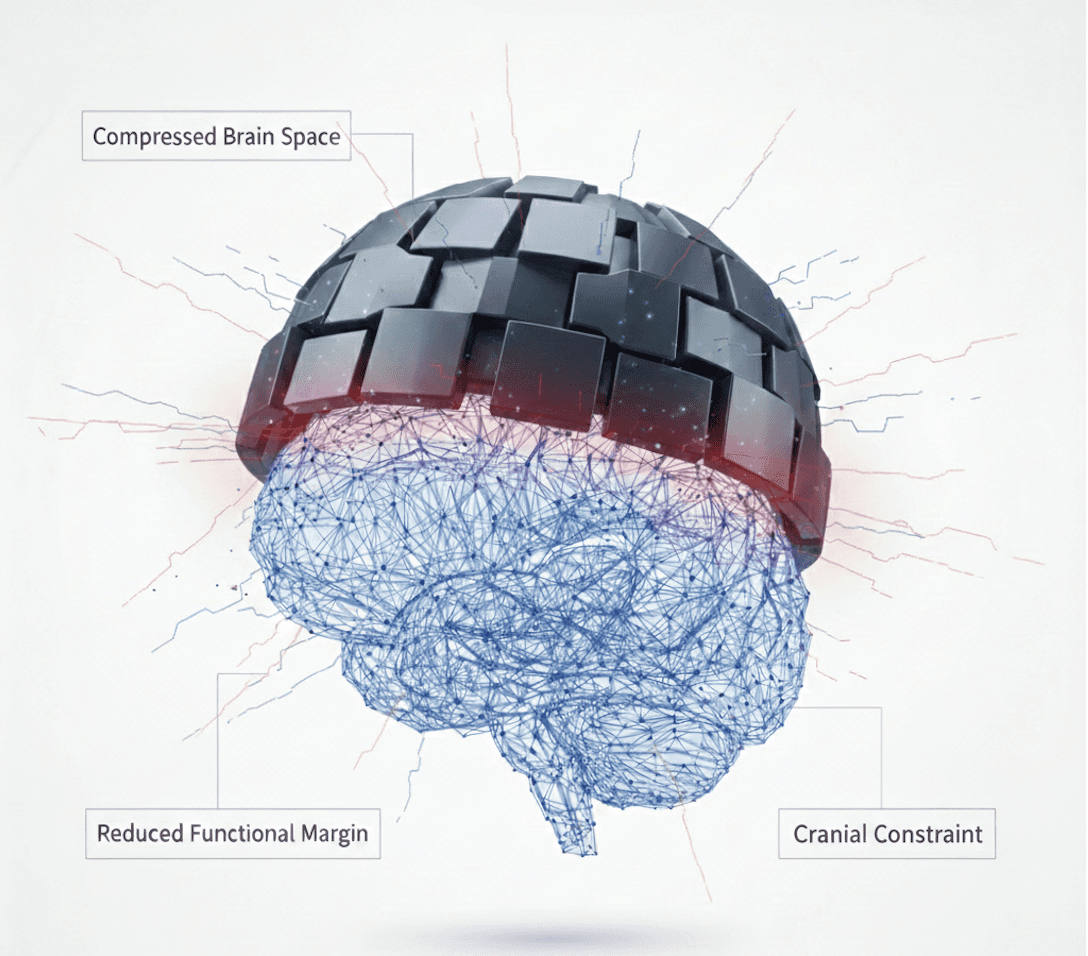
We observe that in many individuals, the limitation lies upstream:

the brain itself remains in a long-term locked and compressed state,

shaped by chronic stress, adaptation, and unconscious defense.

When the brain is locked,

clarity diminishes, vitality contracts,

and the capacity to act collapses—

even when the desire for change is sincere.

When change does not arrive,

the problem is often not intention—

but the absence of a usable answer within the body itself.

This is where SpaceTime Passage begins.


From observation to hypothesis—how this research began


SpaceTime Passage began with a recurring observation across

clinical practice and experiential inquiry:


many individuals experience persistent fatigue, chronic stress load,

emotional dysregulation, and a sense of internal incoherence—

even in the absence of clear pathological findings.


Over time, a consistent pattern emerged:


When the brain’s rhythmic balance becomes disrupted,

the entire system—body, breath, emotion, and energy—

tends to lose coherence.


What started as a qualitative observation gradually evolved

into a structured research question and a testable hypothesis:

whether restoring brain-centered rhythmic regulation

could support systemic recovery and healthspan-related resilience.


In 2024–2025, this research direction was recognized by the

XPRIZE Healthspan Competition, where the project was

invited directly into the semifinalist stage,

acknowledging the novelty and potential significance

of a brain-centered rhythm framework for healthspan research.


Today, SpaceTime Passage continues to refine this inquiry

through ethically reviewed pilot studies,

with the goal of contributing meaningful, measurable insight

to the global conversation on healthy aging.


我們的起點 Our Story


從覺醒,到答案


今天,許多人其實早已知道自己需要改變

他們讀過書、聽過演講、被觸動、被啟發——

然而,當回到日常生活時,

卻發現自己依然無法真正向前行動


這不是意志力的失敗。

也不是動機、信念或努力不足。


我們觀察到,在許多個體身上,

限制往往存在於更上游的層級——

大腦本身,長期處於一種被鎖住、被壓縮的狀態,

這種狀態來自慢性壓力、適應模式,

以及無意識的防禦機制。


當大腦仍被鎖住,

清明會下降、活力會收縮,

行動的能力也隨之瓦解——

即使改變的渴望是真實而誠懇的。


當改變遲遲沒有發生,

問題往往不在於意願不足,

而在於——

身體內部,尚未出現一個真正可用的答案。


這,正是 SpaceTime Passage 的起點。


從觀察走向假說——研究如何開始

SpaceTime Passage 的起點,來自長期臨床實務

與體驗式探索中的一個反覆出現的觀察:

許多人在未出現明確病理指標的情況下,

長期感到疲勞、壓力負荷過高、情緒失衡,

並伴隨一種難以言喻的「內在失序感」。


隨著時間推移,一個一致的模式逐漸浮現:


當大腦的節律平衡受到干擾時,

身體、呼吸、情緒與能量的整體協調

往往也隨之下降。


這項觀察,最初並非既定理論,

而是逐步發展為一個可被檢驗的研究問題:

若能恢復以大腦為核心的節律調節,

是否可能支持系統性的恢復能力

與健康壽命相關的韌性表現?


2024–2025 年

此研究方向獲得 XPRIZE 健康壽命競賽 的肯定,

本計畫因此 直接受邀進入半決賽階段

顯示以大腦節律為核心的研究視角

具備創新性與潛在科學價值。


目前,SpaceTime Passage 持續透過

經倫理審查的前期研究,

深化這項探索,

期望為全球健康老化的研究討論

提供具體且可衡量的科學洞見。


Team & Commitment


Research led with responsibility, integrity, and long-term vision


SpaceTime Passage is led by practitioners and researchers

committed to advancing brain-centered rhythm science

through careful observation, ethical research design,

and interdisciplinary collaboration.


Founder & Principal Investigator


Lu Yu, M.S., L.Ac.

Licensed Acupuncturist and Integrative Wellness Practitioner

with a research focus on rhythm-based health frameworks,

brain-centered restorative practices,

and multi-modal approaches to vitality and healthspan.

Her work integrates:


  • clinical observation

  • long-term meditative and experiential inquiry

  • rhythm-oriented therapeutic systems


This integrated perspective informs the scientific direction

and research structure of SpaceTime Passage.


Advisors & Collaborators

SpaceTime Passage collaborates with interdisciplinary experts

across neuroscience, integrative health, and wellness research.

Additional advisors and research collaborators

will be announced as partnerships formally develop.


Our Commitment

We are committed to building a foundation for rhythm-based

healthspan research that is:

  • scientifically grounded

  • ethically conducted

  • transparent in intent and scope

  • respectful of individual variability

  • accessible to diverse communities

As our research evolves,

this initiative will continue to grow through collaboration,

rigorous inquiry, and responsible knowledge sharing.


團隊與承諾


以責任、倫理與長期視野推進節律健康研究


SpaceTime Passage 由致力於節律健康科學的

研究者與實務工作者共同推動,

以謹慎觀察、研究倫理與跨領域合作

作為核心原則。


創辦人暨主要研究者


Lu Yu, M.S., L.Ac.


加州執照針灸師、整合健康實務者,

研究重點聚焦於:

  • 以節律為導向的健康模型

  • 以大腦為核心的修復性實踐

  • 多模態的活力與健康壽命研究方法


其研究視角融合臨床觀察、

長期內在實踐經驗,

以及節律導向的療癒系統,

共同形塑 SpaceTime Passage 的研究方向與架構。


顧問與合作夥伴


SpaceTime Passage 與來自神經科學、

整合健康與相關研究領域的專家

進行跨領域合作。


隨著研究合作逐步成熟,

相關顧問與研究夥伴將陸續公開。


我們的承


我們致力於建立一套

以節律為核心的健康壽命研究基礎,其特點為:


  • 具備科學嚴謹性

  • 遵循研究倫理

  • 研究目的與範圍透明

  • 尊重個體差異

  • 對不同族群具可近性


隨著研究持續推進,

SpaceTime Passage 將透過合作、

嚴謹探索與負責任的知識分享,

逐步拓展其研究深度與社會價值。


Research Overview


This page outlines research questions, hypotheses,
and system-level observations rather
than actionable methods.

A Brain-Centered Rhythm Perspective

Human health rarely declines at a single point.

More often, change unfolds gradually—

across connected layers of a living system.

This research does not seek to define where health begins,

nor does it focus on isolated symptoms.

Instead, it examines where and how systemic restoration becomes observable

when internal regulation is placed under sustained, often unconscious pressure.

Much like moving forward while continuously pressing the brake,

the body adapts, compensates, and holds—

until space narrows, rhythm slows, and recovery becomes constrained.

SpaceTime Passage approaches healthspan through an integrated lens,

exploring how neural regulation, cellular vitality,

and individual rhythm interact over time

as part of a unified regulatory system.


研究概述

本页面用于呈现研究问题、假说与系统层级观察,而非可操作的方法说明。

以大脑节律为核心的研究视角

人类的健康,往往并非在某一个单点突然衰退。

更多时候,变化是在一个相互连结的生命系统中,

逐层、渐进地发生的

本研究并不试图定义健康从何而来,

也不聚焦于单一症状的出现。

我们关注的是:

当身体长期处于无意识的压力与压缩之下,

整体调节系统是如何逐渐偏离原有节律,

以及系统性修复开始显现的层级与条件。

如同在前行时不断踩着刹车,

身体会代偿、撑住、继续运转——

直到空间收缩、节律放缓,

恢复能力受到限制。

SpaceTime Passage 以整合性的研究视角切入健康寿命议题,

探索神经调节、细胞活力与个体节律,

如何在时间中彼此作用,

共同构成一个统一的调节系统。


Neural Regulation


The Central Rhythm Axis

The brain–spinal axis functions as the system’s primary regulatory engine,

coordinating perception, movement, autonomic balance, and recovery.

When sustained tension, chronic stress, or sleep disruption

compresses this axis,

the body does not immediately fail—

it adapts.

This adaptive holding allows function to continue,

but over time it reduces recovery range,

slows release dynamics,

and progressively narrows systemic resilience.

In this state, regulation is not lost—

it is constrained.


神经调节|核心节律轴线

大脑—脊髓轴,是整个人体系统的核心调节引擎

负责整合知觉、动作、自主神经平衡与修复节律。

当长期紧张、慢性压力或睡眠紊乱

持续压缩这条轴线时,

身体并不会立刻失效——

它会先适应

这种代偿性的承载,

让系统得以继续运作,

但随着时间推移,

恢复的空间被压缩,

释放的节律被放慢,

整体韧性逐渐收窄。

在这种状态下,

调节能力并未消失,

而是被限制了


Cellular Viability

Life at the Smallest Scale

Cells rely on space, circulation, and rhythmic recovery

to maintain function and regeneration.

Under chronic compression states,

energy delivery becomes inefficient,

repair processes are delayed,

and regenerative capacity gradually declines.

From this perspective, aging is not only the result of accumulated damage—

but of prolonged suppression of cellular vitality

within a constrained internal environment.


细胞层的生命力

细胞的运作,

依赖于空间、循环,以及节律性的恢复能力

才能维持功能与再生。

当系统长期处于受压状态时,

能量输送效率下降,

修复过程被延迟,

细胞的再生潜能逐渐衰退。

从这一视角来看,

衰老不仅是损伤的累积,

更是在受限环境中,细胞生命力被长期压抑的结果


Individual Rhythm

Why Outcomes Differ

Each individual carries an inherent rhythm—

how tension is held,

how recovery unfolds,

and how long compensation can be sustained.

Health outcomes are shaped not only by external exposure,

but by internal rhythm.

SpaceTime Passage explores whether restoring neural release

can reopen cellular space

and recalibrate individual recovery capacity.


个体节律|为何结果不同

每个人都携带着自身独特的内在节律——

紧张如何被承载,

恢复如何展开,

以及代偿能够维持多久。

健康结果并不只取决于外在条件,

更深层地受到个体节律模式的影响。

SpaceTime Passage 探索的核心问题是:

当神经层面的释放得以恢复,

是否能够重新打开细胞空间,

并重新校准个体的恢复能力。


Research Overview


This page outlines research questions, hypotheses,
and system-level observations rather
than actionable methods.

A Brain-Centered Rhythm Perspective

Human health rarely declines at a single point.

More often, change unfolds gradually—

across connected layers of a living system.

This research does not seek to define where health begins,

nor does it focus on isolated symptoms.

Instead, it examines where and how systemic restoration becomes observable

when internal regulation is placed under sustained, often unconscious pressure.

Much like moving forward while continuously pressing the brake,

the body adapts, compensates, and holds—

until space narrows, rhythm slows, and recovery becomes constrained.

SpaceTime Passage approaches healthspan through an integrated lens,

exploring how neural regulation, cellular vitality,

and individual rhythm interact over time

as part of a unified regulatory system.


研究概述

本页面用于呈现研究问题、假说与系统层级观察,而非可操作的方法说明。

以大脑节律为核心的研究视角

人类的健康,往往并非在某一个单点突然衰退。

更多时候,变化是在一个相互连结的生命系统中,

逐层、渐进地发生的

本研究并不试图定义健康从何而来,

也不聚焦于单一症状的出现。

我们关注的是:

当身体长期处于无意识的压力与压缩之下,

整体调节系统是如何逐渐偏离原有节律,

以及系统性修复开始显现的层级与条件。

如同在前行时不断踩着刹车,

身体会代偿、撑住、继续运转——

直到空间收缩、节律放缓,

恢复能力受到限制。

SpaceTime Passage 以整合性的研究视角切入健康寿命议题,

探索神经调节、细胞活力与个体节律,

如何在时间中彼此作用,

共同构成一个统一的调节系统。


Neural Regulation


The Central Rhythm Axis

The brain–spinal axis functions as the system’s primary regulatory engine,

coordinating perception, movement, autonomic balance, and recovery.

When sustained tension, chronic stress, or sleep disruption

compresses this axis,

the body does not immediately fail—

it adapts.

This adaptive holding allows function to continue,

but over time it reduces recovery range,

slows release dynamics,

and progressively narrows systemic resilience.

In this state, regulation is not lost—

it is constrained.


神经调节|核心节律轴线

大脑—脊髓轴,是整个人体系统的核心调节引擎

负责整合知觉、动作、自主神经平衡与修复节律。

当长期紧张、慢性压力或睡眠紊乱

持续压缩这条轴线时,

身体并不会立刻失效——

它会先适应

这种代偿性的承载,

让系统得以继续运作,

但随着时间推移,

恢复的空间被压缩,

释放的节律被放慢,

整体韧性逐渐收窄。

在这种状态下,

调节能力并未消失,

而是被限制了


Cellular Viability

Life at the Smallest Scale

Cells rely on space, circulation, and rhythmic recovery

to maintain function and regeneration.

Under chronic compression states,

energy delivery becomes inefficient,

repair processes are delayed,

and regenerative capacity gradually declines.

From this perspective, aging is not only the result of accumulated damage—

but of prolonged suppression of cellular vitality

within a constrained internal environment.


细胞层的生命力

细胞的运作,

依赖于空间、循环,以及节律性的恢复能力

才能维持功能与再生。

当系统长期处于受压状态时,

能量输送效率下降,

修复过程被延迟,

细胞的再生潜能逐渐衰退。

从这一视角来看,

衰老不仅是损伤的累积,

更是在受限环境中,细胞生命力被长期压抑的结果


Individual Rhythm

Why Outcomes Differ

Each individual carries an inherent rhythm—

how tension is held,

how recovery unfolds,

and how long compensation can be sustained.

Health outcomes are shaped not only by external exposure,

but by internal rhythm.

SpaceTime Passage explores whether restoring neural release

can reopen cellular space

and recalibrate individual recovery capacity.


个体节律|为何结果不同

每个人都携带着自身独特的内在节律——

紧张如何被承载,

恢复如何展开,

以及代偿能够维持多久。

健康结果并不只取决于外在条件,

更深层地受到个体节律模式的影响。

SpaceTime Passage 探索的核心问题是:

当神经层面的释放得以恢复,

是否能够重新打开细胞空间,

并重新校准个体的恢复能力。


Research Overview


This page outlines research questions, hypotheses,
and system-level observations rather
than actionable methods.

A Brain-Centered Rhythm Perspective

Human health rarely declines at a single point.

More often, change unfolds gradually—

across connected layers of a living system.

This research does not seek to define where health begins,

nor does it focus on isolated symptoms.

Instead, it examines where and how systemic restoration becomes observable

when internal regulation is placed under sustained, often unconscious pressure.

Much like moving forward while continuously pressing the brake,

the body adapts, compensates, and holds—

until space narrows, rhythm slows, and recovery becomes constrained.

SpaceTime Passage approaches healthspan through an integrated lens,

exploring how neural regulation, cellular vitality,

and individual rhythm interact over time

as part of a unified regulatory system.


研究概述

本页面用于呈现研究问题、假说与系统层级观察,而非可操作的方法说明。

以大脑节律为核心的研究视角

人类的健康,往往并非在某一个单点突然衰退。

更多时候,变化是在一个相互连结的生命系统中,

逐层、渐进地发生的

本研究并不试图定义健康从何而来,

也不聚焦于单一症状的出现。

我们关注的是:

当身体长期处于无意识的压力与压缩之下,

整体调节系统是如何逐渐偏离原有节律,

以及系统性修复开始显现的层级与条件。

如同在前行时不断踩着刹车,

身体会代偿、撑住、继续运转——

直到空间收缩、节律放缓,

恢复能力受到限制。

SpaceTime Passage 以整合性的研究视角切入健康寿命议题,

探索神经调节、细胞活力与个体节律,

如何在时间中彼此作用,

共同构成一个统一的调节系统。


Neural Regulation


The Central Rhythm Axis

The brain–spinal axis functions as the system’s primary regulatory engine,

coordinating perception, movement, autonomic balance, and recovery.

When sustained tension, chronic stress, or sleep disruption

compresses this axis,

the body does not immediately fail—

it adapts.

This adaptive holding allows function to continue,

but over time it reduces recovery range,

slows release dynamics,

and progressively narrows systemic resilience.

In this state, regulation is not lost—

it is constrained.


神经调节|核心节律轴线

大脑—脊髓轴,是整个人体系统的核心调节引擎

负责整合知觉、动作、自主神经平衡与修复节律。

当长期紧张、慢性压力或睡眠紊乱

持续压缩这条轴线时,

身体并不会立刻失效——

它会先适应

这种代偿性的承载,

让系统得以继续运作,

但随着时间推移,

恢复的空间被压缩,

释放的节律被放慢,

整体韧性逐渐收窄。

在这种状态下,

调节能力并未消失,

而是被限制了


Cellular Viability

Life at the Smallest Scale

Cells rely on space, circulation, and rhythmic recovery

to maintain function and regeneration.

Under chronic compression states,

energy delivery becomes inefficient,

repair processes are delayed,

and regenerative capacity gradually declines.

From this perspective, aging is not only the result of accumulated damage—

but of prolonged suppression of cellular vitality

within a constrained internal environment.


细胞层的生命力

细胞的运作,

依赖于空间、循环,以及节律性的恢复能力

才能维持功能与再生。

当系统长期处于受压状态时,

能量输送效率下降,

修复过程被延迟,

细胞的再生潜能逐渐衰退。

从这一视角来看,

衰老不仅是损伤的累积,

更是在受限环境中,细胞生命力被长期压抑的结果


Individual Rhythm

Why Outcomes Differ

Each individual carries an inherent rhythm—

how tension is held,

how recovery unfolds,

and how long compensation can be sustained.

Health outcomes are shaped not only by external exposure,

but by internal rhythm.

SpaceTime Passage explores whether restoring neural release

can reopen cellular space

and recalibrate individual recovery capacity.


个体节律|为何结果不同

每个人都携带着自身独特的内在节律——

紧张如何被承载,

恢复如何展开,

以及代偿能够维持多久。

健康结果并不只取决于外在条件,

更深层地受到个体节律模式的影响。

SpaceTime Passage 探索的核心问题是:

当神经层面的释放得以恢复,

是否能够重新打开细胞空间,

并重新校准个体的恢复能力。


Participation Overview


An Invitation to Experience


Participation is not simply joining a study.

It is an invitation into direct experience.

SpaceTime Passage is grounded in a simple premise:

real understanding does not arise from explanation alone—

it emerges from what your system begins to feel.

Participation opens a doorway

where observation becomes embodiment,

and curiosity begins to take form as lived change.


参与概览|一种亲身体验的邀请

参与,并不仅仅是加入一项研究。

它是一份走向直接体验的邀请。

SpaceTime Passage 建立在一个简单而重要的前提之上:

真正的理解,并不只来自解释——

而是来自你的系统开始真实感受到的变化

参与,开启了一道入口,

让观察转化为体验,

让好奇逐渐成为可被感知的改变。


Who May Participate


Who This Is For


This exploration is open to individuals who:


are curious about how their own system responds to guided experience

are willing to observe themselves with honesty and patience

sense that something in their rhythm has slowed, tightened, or dulled

feel ready to engage—not to be fixed, but to notice change


No prior background is required.

No special belief is necessary.


Only a willingness to show up

and allow your system to respond in its own way.


誰適合參與


這項探索適合這樣的你:


對自身系統如何回應引導式體驗感到好奇

願意以誠實與耐心觀察自己

隱約感覺到自己的節奏變慢了、變緊了,或變得遲鈍

準備好參與——不是為了被「修復」,而是為了覺察改變


不需要任何背景知識。

不需要特定信念。


只需要願意出現,

並允許你的系統,以它自己的方式回應。


What Participation Involves


The Experience


Participation involves a guided, non-invasive exploration

designed to observe how your system responds over time.


You may be invited to:


engage in structured, brain-centered rhythmic practices

participate in supportive, non-invasive interventions

reflect on changes in perception, energy, and recovery

take part in observation across a defined period


There is no pressure to perform

and no expectation to feel a certain way.


The role of participation is simple:

to allow experience to unfold

and notice what begins to change.


參與將包含什麼


這段體驗是什麼樣的


參與是一項在引導下進行的、非侵入式探索,

用來觀察你的系統,如何隨時間產生回應。


你可能會被邀請:


參與結構化、以大腦節律為核心的實踐

接受支持性的、非侵入式介入

回顧並覺察感受、能量與恢復層面的變化

在特定期間內進行連續觀察


不需要表現得「正確」,

也沒有任何必須出現的感受。


參與的角色很單純:

允許體驗自然展開,

並留意——什麼開始不同了。


Ethics, Autonomy & Boundaries


Your Choice Comes First

Participation is always voluntary.

You decide how deeply to engage,

how long to continue,

and when to pause or stop.


SpaceTime Passage does not replace medical care

and does not involve diagnosis, treatment, or experimental medication.


All participation occurs within clear ethical frameworks,

with informed consent, data protection,

and respect for personal autonomy.


Your experience belongs to you.

Any information you choose to share

is handled with care, confidentiality, and purpose.


This space exists to support

observation, safety, and clarity.


倫理、自主與界線


你的選擇始終在前

所有參與皆為自願。


你可以自行決定參與的深度、

持續的時間,

以及何時暫停或結束。


SpaceTime Passage 不取代任何醫療行為,

亦不涉及診斷、治療或實驗性藥物。


所有參與皆在清楚的倫理框架下進行,

包含知情同意、資料保護,

以及對個人自主的尊重。


你的體驗,始終屬於你自己。

任何你選擇分享的資訊,

都將被謹慎、保密且有目的地使用。


這個空間的存在,

是為了支持觀察、安全與清明。


How to Participate


An Invitation, Not an Obligation


If something here resonates,

you are welcome to express your interest.

Participation begins simply—

by letting us know who you are

and what brings you here.


From there, any next step—if it feels right—

is shared with clarity, consent,

and mutual understanding.

There is no pressure to proceed.

No requirement to commit.


This is an invitation—

to step a little closer,

to listen inward,

and to decide, in your own time

and in your own rhythm.


Express Interest

Research Participation & Guided Pathways

A simple inquiry.

No obligation.

We will respond with clarity and care.


如何参与|表达参与意向


这是一份邀请,而不是要求


如果这里的某些内容与你产生了共鸣,

欢迎你表达进一步了解或参与的意向。

参与的起点很简单——

只是让我们知道你是谁,

以及是什么将你带到这里。


之后的任何下一步(如果你愿意),

都会在清楚说明、知情同意

与彼此理解的前提下展开。

这里没有压力,

也没有必须继续的承诺。


这是一份邀请——

邀请你靠近一点,

向内倾听,

并在属于你的节奏中,

做出选择。


→ 表达参与意向

研究参与与引导路径

一次简单的联系。

没有义务。

我们将以清楚与尊重回应。


Participation Overview


An Invitation to Experience


Participation is not simply joining a study.

It is an invitation into direct experience.

SpaceTime Passage is grounded in a simple premise:

real understanding does not arise from explanation alone—

it emerges from what your system begins to feel.

Participation opens a doorway

where observation becomes embodiment,

and curiosity begins to take form as lived change.


参与概览|一种亲身体验的邀请

参与,并不仅仅是加入一项研究。

它是一份走向直接体验的邀请。

SpaceTime Passage 建立在一个简单而重要的前提之上:

真正的理解,并不只来自解释——

而是来自你的系统开始真实感受到的变化

参与,开启了一道入口,

让观察转化为体验,

让好奇逐渐成为可被感知的改变。


Who May Participate


Who This Is For


This exploration is open to individuals who:


are curious about how their own system responds to guided experience

are willing to observe themselves with honesty and patience

sense that something in their rhythm has slowed, tightened, or dulled

feel ready to engage—not to be fixed, but to notice change


No prior background is required.

No special belief is necessary.


Only a willingness to show up

and allow your system to respond in its own way.


誰適合參與


這項探索適合這樣的你:


對自身系統如何回應引導式體驗感到好奇

願意以誠實與耐心觀察自己

隱約感覺到自己的節奏變慢了、變緊了,或變得遲鈍

準備好參與——不是為了被「修復」,而是為了覺察改變


不需要任何背景知識。

不需要特定信念。


只需要願意出現,

並允許你的系統,以它自己的方式回應。


What Participation Involves


The Experience


Participation involves a guided, non-invasive exploration

designed to observe how your system responds over time.


You may be invited to:


engage in structured, brain-centered rhythmic practices

participate in supportive, non-invasive interventions

reflect on changes in perception, energy, and recovery

take part in observation across a defined period


There is no pressure to perform

and no expectation to feel a certain way.


The role of participation is simple:

to allow experience to unfold

and notice what begins to change.


參與將包含什麼


這段體驗是什麼樣的


參與是一項在引導下進行的、非侵入式探索,

用來觀察你的系統,如何隨時間產生回應。


你可能會被邀請:


參與結構化、以大腦節律為核心的實踐

接受支持性的、非侵入式介入

回顧並覺察感受、能量與恢復層面的變化

在特定期間內進行連續觀察


不需要表現得「正確」,

也沒有任何必須出現的感受。


參與的角色很單純:

允許體驗自然展開,

並留意——什麼開始不同了。


Ethics, Autonomy & Boundaries


Your Choice Comes First

Participation is always voluntary.

You decide how deeply to engage,

how long to continue,

and when to pause or stop.


SpaceTime Passage does not replace medical care

and does not involve diagnosis, treatment, or experimental medication.


All participation occurs within clear ethical frameworks,

with informed consent, data protection,

and respect for personal autonomy.


Your experience belongs to you.

Any information you choose to share

is handled with care, confidentiality, and purpose.


This space exists to support

observation, safety, and clarity.


倫理、自主與界線


你的選擇始終在前

所有參與皆為自願。


你可以自行決定參與的深度、

持續的時間,

以及何時暫停或結束。


SpaceTime Passage 不取代任何醫療行為,

亦不涉及診斷、治療或實驗性藥物。


所有參與皆在清楚的倫理框架下進行,

包含知情同意、資料保護,

以及對個人自主的尊重。


你的體驗,始終屬於你自己。

任何你選擇分享的資訊,

都將被謹慎、保密且有目的地使用。


這個空間的存在,

是為了支持觀察、安全與清明。


How to Participate


An Invitation, Not an Obligation


If something here resonates,

you are welcome to express your interest.

Participation begins simply—

by letting us know who you are

and what brings you here.


From there, any next step—if it feels right—

is shared with clarity, consent,

and mutual understanding.

There is no pressure to proceed.

No requirement to commit.


This is an invitation—

to step a little closer,

to listen inward,

and to decide, in your own time

and in your own rhythm.


Express Interest

Research Participation & Guided Pathways

A simple inquiry.

No obligation.

We will respond with clarity and care.


如何参与|表达参与意向


这是一份邀请,而不是要求


如果这里的某些内容与你产生了共鸣,

欢迎你表达进一步了解或参与的意向。

参与的起点很简单——

只是让我们知道你是谁,

以及是什么将你带到这里。


之后的任何下一步(如果你愿意),

都会在清楚说明、知情同意

与彼此理解的前提下展开。

这里没有压力,

也没有必须继续的承诺。


这是一份邀请——

邀请你靠近一点,

向内倾听,

并在属于你的节奏中,

做出选择。


→ 表达参与意向

研究参与与引导路径

一次简单的联系。

没有义务。

我们将以清楚与尊重回应。


Practice · Neuro-Taiji|The Passage

Neuro-Taiji|A Passage of Return


This is a Neuro-Taiji passage—

a corridor of transition.

We have created a pathway that unfolds gradually,

from simple to subtle,

from entry to refinement.

A space where unconscious holding, long-term compression,

and the accumulated weight of stress, trauma, and exhaustion

finally find room to breathe.

What has been locked, tightened, and held

is given permission to release.

This is not an escape—

it is a return.

When the lock begins to loosen,

neurons and cells regain movement,

and the system remembers how to function.

You are welcome to enter

the Neuro-Taiji Passage

at any time.


腦太極-穿越隧道

這是一條腦太極的穿越通道——

一條回歸之路。

我們為你搭建了一條

由淺入深、由簡至精、逐層展開的練習通道。

在這裡,

所有無意識的緊鎖、限制與壓縮,

那些來自生活壓力、創傷與長期疲憊的累積影響,

終於得以鬆動與呼吸。


被卡住的、被鎖住的、被壓縮得近乎窒息的大腦,

第一次獲得空間。
這不是逃離,

而是回歸。


當緊鎖開始鬆動,

神經與細胞重新流動,

系統自然地

憶起如何運作。


你,隨時都可以進入——

腦太極穿越之門。


Access & Progression Statement

Controlled Research Access

Practice materials are accessible only to approved study participants

under a controlled research framework.


This page does not provide instructional guidance,

intervention protocols, or replicable methods.


Access to practice-related materials is granted

solely for research observation and ethical study participation.


A Research Note on Progression


This is not an upgrade.

There is no level to achieve,

no path to accelerate,

no decision you are required to make.


Progression within this research

is not driven by effort or intention.

It occurs naturally

when space becomes available.


Some participants remain with the foundational practice.

Others pause, return, or simply stay connected.

All are valid within the research context.


進入與進展說明


練習相關內容僅對經核准的研究參與者開放,

並於受控的研究框架下進行。

本頁面不提供任何教學指引、

介入方案或可複製的方法。


所有練習內容的開放,

僅用於研究觀察與倫理審核下的參與。


這不是升級。

這裡沒有層級需要達成,

沒有路徑需要加速,

也沒有任何你必須做出的決定。

在這項研究中,

進展並非由努力或意圖推動。

它只會在空間出現時,

自然發生。


有些參與者停留在基礎層,

有些人暫停、回返,

也有人只是保持連結。

在研究脈絡中,

這些狀態全都成立。


The Passage Remains Open


Begin where you are.

You may enter freely,

or simply remain connected.

There is no urgency.


No obligation.

This research pathway does not require a decision now.

It remains available

whenever curiosity, readiness, or time allows.


Stay Connected

Research participation & guided pathways


Express Research Interest

A simple inquiry · No commitment


通道始终开放


从你此刻所在的位置开始。

你可以选择进入,

也可以只是保持连接。

这里没有催促,

也没有任何义务。


这是一条研究路径,

不要求你现在做出决定。

当好奇、准备或时间成熟时,

它始终都在。


保持连接

研究参与与引导路径


表达研究兴趣

一次简单的联系 · 无需承诺


Practice · Neuro-Taiji|The Passage

Neuro-Taiji|A Passage of Return


This is a Neuro-Taiji passage—

a corridor of transition.

We have created a pathway that unfolds gradually,

from simple to subtle,

from entry to refinement.

A space where unconscious holding, long-term compression,

and the accumulated weight of stress, trauma, and exhaustion

finally find room to breathe.

What has been locked, tightened, and held

is given permission to release.

This is not an escape—

it is a return.

When the lock begins to loosen,

neurons and cells regain movement,

and the system remembers how to function.

You are welcome to enter

the Neuro-Taiji Passage

at any time.


腦太極-穿越隧道

這是一條腦太極的穿越通道——

一條回歸之路。

我們為你搭建了一條

由淺入深、由簡至精、逐層展開的練習通道。

在這裡,

所有無意識的緊鎖、限制與壓縮,

那些來自生活壓力、創傷與長期疲憊的累積影響,

終於得以鬆動與呼吸。


被卡住的、被鎖住的、被壓縮得近乎窒息的大腦,

第一次獲得空間。
這不是逃離,

而是回歸。


當緊鎖開始鬆動,

神經與細胞重新流動,

系統自然地

憶起如何運作。


你,隨時都可以進入——

腦太極穿越之門。


Access & Progression Statement

Controlled Research Access

Practice materials are accessible only to approved study participants

under a controlled research framework.


This page does not provide instructional guidance,

intervention protocols, or replicable methods.


Access to practice-related materials is granted

solely for research observation and ethical study participation.


A Research Note on Progression


This is not an upgrade.

There is no level to achieve,

no path to accelerate,

no decision you are required to make.


Progression within this research

is not driven by effort or intention.

It occurs naturally

when space becomes available.


Some participants remain with the foundational practice.

Others pause, return, or simply stay connected.

All are valid within the research context.


進入與進展說明


練習相關內容僅對經核准的研究參與者開放,

並於受控的研究框架下進行。

本頁面不提供任何教學指引、

介入方案或可複製的方法。


所有練習內容的開放,

僅用於研究觀察與倫理審核下的參與。


這不是升級。

這裡沒有層級需要達成,

沒有路徑需要加速,

也沒有任何你必須做出的決定。

在這項研究中,

進展並非由努力或意圖推動。

它只會在空間出現時,

自然發生。


有些參與者停留在基礎層,

有些人暫停、回返,

也有人只是保持連結。

在研究脈絡中,

這些狀態全都成立。


The Passage Remains Open


Begin where you are.

You may enter freely,

or simply remain connected.

There is no urgency.


No obligation.

This research pathway does not require a decision now.

It remains available

whenever curiosity, readiness, or time allows.


Stay Connected

Research participation & guided pathways


Express Research Interest

A simple inquiry · No commitment


通道始终开放


从你此刻所在的位置开始。

你可以选择进入,

也可以只是保持连接。

这里没有催促,

也没有任何义务。


这是一条研究路径,

不要求你现在做出决定。

当好奇、准备或时间成熟时,

它始终都在。


保持连接

研究参与与引导路径


表达研究兴趣

一次简单的联系 · 无需承诺